
Fuel Marketers Push Back Against Dangote Refinery’s Fresh Lawsuit to Halt Petrol Imports
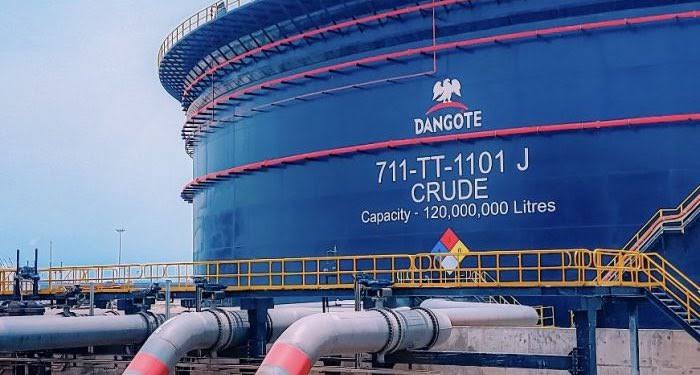
A fresh legal showdown is intensifying in Nigeria’s downstream petroleum sector as major fuel marketers and depot owners vigorously oppose a new lawsuit by the Dangote Petroleum Refinery seeking to block import licences for petroleum products. The dispute underscores the delicate national balancing act between nurturing Africa’s largest refinery for energy independence and safeguarding supply security, market competition, and affordable pump prices amid global volatility.
On or around May 15, 2026, Dangote Petroleum Refinery filed a fresh suit at the Federal High Court in Lagos against Nigeria’s Attorney-General, challenging import permits recently issued or renewed by the Nigerian Midstream and Downstream Petroleum Regulatory Authority (NMDPRA). The refinery argues that these licences — granted to marketers and the Nigerian National Petroleum Company Limited (NNPCL) — undermine its operations and violate the Petroleum Industry Act (PIA), which it interprets as permitting imports only when domestic supply falls short of demand.
Court documents indicate the suit seeks to set aside the permits, claiming they breach a prior court order to maintain the status quo. This marks the second major legal push by the $20 billion Lekki facility; a similar case filed earlier was withdrawn in July 2025 without detailed explanation.
Dangote officials maintain the refinery is now operating robustly, having exceeded its 650,000 barrels per day (bpd) nameplate capacity by processing up to 661,000 bpd. It currently supplies a significant portion of Nigeria’s petrol needs, sources much of its crude domestically (around 56%), and has ambitions to expand to 1.4 million bpd. The company contends continued imports are unjustified and harm local refining investments.
Fuel marketers are not backing down. The Depot and Petroleum Products Marketers Association of Nigeria (DAPPMAN) issued a strongly worded statement rejecting any move that could sideline competition and threaten their infrastructure investments. They describe the import licences as vital legal tools for energy security, issued under the PIA framework to prevent shortages.
“DAPPMAN member companies have invested billions of naira in depot infrastructure, logistics networks, and compliance systems… A legal action designed to retroactively void those licences introduces uncertainty into the entire downstream supply chain at a moment when Nigeria can least afford it,” the association declared. They plan to engage legal counsel and make formal representations, emphasizing that a single dominant supplier should not override the regulator’s mandate for adequate supply.
The Independent Petroleum Marketers Association of Nigeria (IPMAN) echoed these concerns. Vice-President Hammed Fashola argued that Dangote should focus on competitive pricing rather than legal barriers. “If he brings down his price to a reasonable level, importation would be difficult,” he said, warning that the suit fuels monopoly fears.
The Petroleum Products Retail Outlets Owners Association of Nigeria (PETROAN) also deemed the lawsuit unnecessary, stressing the need for reliable product availability, transparent pricing, and efficient loading operations. Delays in lifting products even after payment highlight that domestic supply is not yet fully sufficient or seamless.
Recent NMDPRA approvals covered about 720,000 metric tonnes of petrol for companies including NIPCO, AA Rano, Matrix Energy, Shafa, Pinnacle Oil, and Bono Energy — intended explicitly to complement local output and avert queues at filling stations.
Nigeria has long imported refined products despite being a major crude exporter, due to the dilapidated state of its government-owned refineries. The Dangote facility was hailed as a game-changer, promising to end import dependence, stabilize supply, and even turn the country into a net exporter of petrol and other products.
Yet challenges persist. The refinery has at times imported crude itself, exposing it to global price shocks, and pump prices have fluctuated sharply. Marketers have occasionally found imported fuel cheaper, while concerns over potential monopoly pricing and supply bottlenecks linger. President Bola Tinubu has strongly backed the refinery, approving naira-for-crude deals and other supports to bolster energy security, especially amid Middle East tensions.
The case is expected to heighten tensions between local refining ambitions and the multi-player market model. Regulators like NMDPRA maintain imports remain necessary for now to ensure stability. As the Federal High Court prepares to weigh the arguments, the outcome could shape Nigeria’s downstream sector for years — determining whether robust competition prevails or a dominant local producer steers the market toward greater self-sufficiency.
For millions of Nigerian motorists and businesses, the stakes are clear: reliable fuel at bearable prices in a nation still navigating its path to full energy independence.

