
African Leaders Convene in Kigali for NEISA 2026: Charting a Nuclear-Powered Future for the Continent
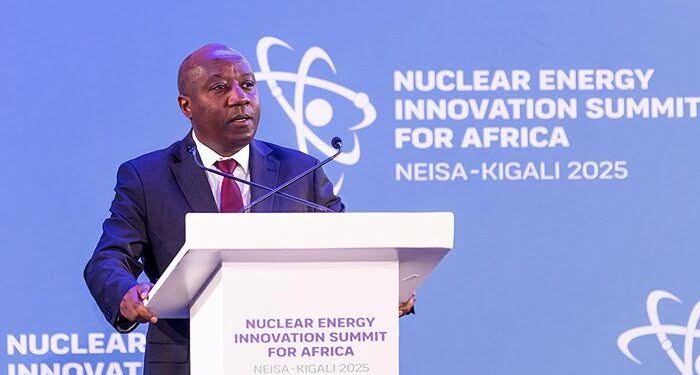
In a landmark gathering underscoring Africa’s bold pivot toward reliable, clean baseload energy, leaders, policymakers, financiers, and global nuclear experts have assembled in Kigali, Rwanda, for the second edition of the Nuclear Energy Innovation Summit for Africa (NEISA 2026). Held from May 18–21, 2026, at the Kigali Convention Centre, the high-level summit—hosted by President Paul Kagame—carries the compelling theme: “Powering Africa’s Future: Turning Nuclear Energy Ambition into Investable Reality.”
The event brings together heads of state including Tanzania’s President Samia Suluhu Hassan, Togo’s President Faure Essozimna Gnassingbé, and Niger’s Prime Minister Ali Mahamane Zeine, alongside top international figures such as IAEA Director General Rafael Mariano Grossi, World Nuclear Association Director General Dr. Sama Bilbao y León, and OECD Nuclear Energy Agency Director General William D. Magwood IV.
Africa faces surging energy demand driven by rapid industrialization, population growth, and economic transformation. While renewables play a vital role, they often fall short in delivering the continuous, high-capacity baseload power and process heat required for heavy industry, data centers, and stable grids. Advances in Small Modular Reactors (SMRs) and Micro Modular Reactors (MMRs)—offering factory-built modularity, enhanced safety, shorter build times, and scalability—are reshaping possibilities for African contexts with smaller grids and urgent development needs.
Discussions center on overcoming persistent barriers: innovative financing models, risk-sharing frameworks, regulatory harmonization, regional cooperation, local skills development, and supply chain localization. The timing aligns with global shifts, including the World Bank’s decision to lift its longstanding ban on nuclear financing and stronger calls at COP28 for multilateral institutions to embrace nuclear in climate portfolios.
Rwanda is positioning itself at the forefront, with plans for its first SMR operational in the early 2030s and nuclear potentially supplying 60-70% of its electricity mix long-term. Supported by positive IAEA infrastructure reviews, site surveys, and partnerships with entities from the US, Canada, Russia, and beyond, the country is actively building regulatory capacity and institutional frameworks.
Dr. Lassina Zerbo, Chairman of the Rwanda Atomic Energy Board, and other officials emphasize that nuclear deployment must anchor in real industrial demand, deliver domestic value through jobs and value chains, and command public trust through transparency and safety.
Over the four days, participants engage in high-level dialogues, ministerial roundtables, investment-focused plenaries, and technical sessions. Anticipated deliverables include a Nuclear Energy Financing Reference Framework, regional cooperation workstreams, consolidated regulatory priorities, and a post-summit action plan for 2026–2027.
For a continent where energy poverty has long constrained growth, NEISA 2026 represents more than a conference—it signals a strategic commitment to energy sovereignty, industrial leapfrogging, and climate-resilient development. As one observer noted, success will hinge on translating high-level ambition into bankable projects, sustained partnerships, and equitable benefits that empower African nations rather than perpetuate dependency.
With Kigali once again hosting a visionary continental dialogue, Africa’s nuclear chapter is not merely opening—it is accelerating, promising cleaner, stronger, and more self-reliant futures across the continent.

