
Nigeria, Türkiye Sign Updated MoU to Deepen Cooperation in Solid Minerals Sector
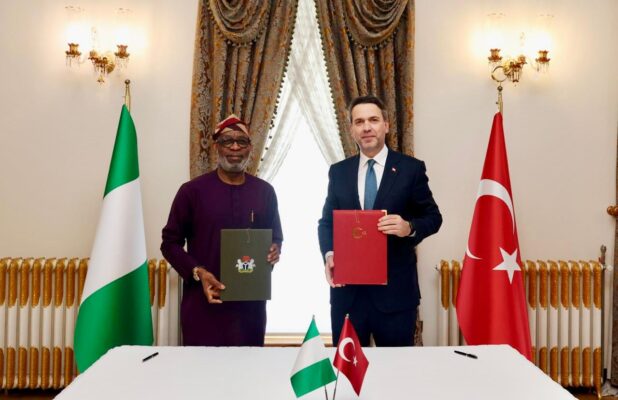
Nigeria and the Republic of Türkiye have signed an updated Memorandum of Understanding (MoU) aimed at strengthening bilateral cooperation in the solid minerals sector, marking a significant step in expanding economic ties between the two nations.
The agreement was signed on the sidelines of the 2nd Istanbul Natural Resources Summit (INRES 2026) at the Lütfi Kırdar Congress Center in Istanbul. Nigeria’s Minister of Solid Minerals Development, Oladele Henry Alake (commonly known as Dele Alake), and Türkiye’s Minister of Energy and Natural Resources, Alparslan Bayraktar, formalized the pact, which updates a previous framework established in 2021.
Speaking after the signing, Minister Alake emphasized Nigeria’s readiness to harness Türkiye’s advanced mining technologies and expertise. Key areas of collaboration include mining exploration, technical training, digitization of processes, licensing systems, and capacity building. These elements are expected to accelerate ongoing reforms and drive sustainable growth in Nigeria’s solid minerals sector.
“Nigeria is ready to leverage Türkiye’s technological advancement and expertise in mining exploration, training, digitisation, licensing systems, and capacity building to accelerate reforms and growth within the sector,” Alake stated.
The minister, who also chairs the Africa Minerals Strategy Group, highlighted the transformative reforms implemented in Nigeria’s mining sector over the past three years under President Bola Tinubu’s administration. These include improved regulatory transparency, stronger enforcement against illegal mining, and enhanced ease of doing business, making the sector more attractive to serious international investors. Nigeria’s untapped mineral potential is estimated at up to $750 billion.
Minister Bayraktar described the updated MoU as a move toward more “functional and results-oriented” cooperation. Discussions between the delegations focused on converting economic potential into concrete projects, including joint investments, geological data sharing, mineral processing, and technology transfer.
The signing aligns with Türkiye’s broader diplomatic push at INRES 2026, which brought together ministers and stakeholders from multiple countries to address global energy security, critical minerals supply chains, and investment opportunities amid shifting geopolitical dynamics.
This partnership reflects Nigeria’s strategic outreach to leverage foreign expertise and capital to develop its vast mineral resources — spanning lithium, tin, columbite, zinc, gold, and rare earth elements — while creating jobs, boosting non-oil exports, and supporting broader economic diversification goals.
Analysts view the updated agreement as a practical follow-up to earlier frameworks, with expectations for a detailed implementation roadmap to ensure tangible outcomes in the coming years.

