
Dangote Refinery Emerges as Dominant Force in Nigeria’s Petrol Supply, Covering 92% of Domestic Needs
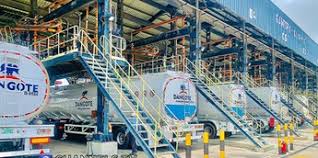
In a landmark shift for Africa’s largest oil producer, the Dangote Petroleum Refinery has become the dominant supplier of Premium Motor Spirit (PMS), commonly known as petrol, meeting approximately 92% of Nigeria’s domestic requirements as of February 2026. This development has dramatically eased long-standing pressure on fuel imports, marking a historic turning point in the country’s downstream petroleum sector.
According to data from the Nigerian Midstream and Downstream Petroleum Regulatory Authority (NMDPRA), total national daily petrol supply in February stood at around 39.5 million litres. Domestic refining—overwhelmingly driven by the Dangote facility—accounted for roughly 92% of this volume, with imports reduced to minimal levels. The Federal Government responded by pausing new imports of PMS, reflecting confidence in local production capacity.
This milestone builds on steady progress throughout late 2025 and early 2026. In December 2025, Dangote’s petrol supply rose 64% to 32 million litres per day. By January 2026, it climbed further to an average of 40.1 million litres daily, capturing about 62% of the market and surpassing imports for the first time in over a year. Total supply that month reached 64.9 million litres, with domestic output contributing the majority.
The refinery, a $19+ billion single-train facility with a nameplate capacity of 650,000 barrels per day located in Lekki, Lagos, began petrol production in September 2025. It is designed to produce up to 75 million litres of PMS daily—exceeding Nigeria’s estimated consumption of 50–65 million litres—alongside significant volumes of diesel and aviation fuel. Operating near full capacity in key product lines, it has consistently ramped up output despite challenges in securing adequate domestic crude feedstock.
Nigeria’s transition away from fuel imports has yielded tangible economic benefits. The country’s petrol import bill fell sharply in 2025, dropping by approximately $4 billion (a 29% decline) to around $10 billion, largely attributed to rising domestic refining. In 2025 alone, the Dangote Refinery exported refined products worth $5.85 billion, helping improve the nation’s overall goods trade balance. By March 2026, Nigeria achieved net exporter status for petrol for the first time in decades, shipping surplus volumes to markets including Mozambique while domestic supply remained robust.
The impact extends beyond borders. Amid global supply disruptions, including volatility from Middle East tensions, the refinery has increased gasoline and jet fuel exports to other African nations, shipping around 17 gasoline cargoes in March 2026 alone and boosting jet fuel exports dramatically. This positions Nigeria as a emerging regional refining hub, countering years of declining continental capacity.
Challenges persist, however. The refinery has repeatedly highlighted shortfalls in domestic crude supply under the naira-for-crude arrangement, often receiving only about five to ten cargoes monthly against a requirement of 13–19 for optimal operations. It has supplemented with imported crude while pledging to prioritize Nigerian demand. Wholesale petrol prices have seen adjustments amid global crude volatility, with reports of increases in March and April 2026, though the facility has at times absorbed costs to maintain supply stability.
Analysts view the Dangote Refinery’s rise as a game-changer for energy security. By reducing reliance on foreign exchange for imports, curbing subsidy pressures, and generating export revenues, it supports broader macroeconomic stability. The NMDPRA and government officials have noted improved supply consistency, with modular refineries providing supplementary volumes.
As Nigeria navigates global oil market uncertainties, the Dangote Refinery’s ability to meet the bulk of domestic petrol needs signals a new era of self-sufficiency. Industry stakeholders anticipate further optimization of crude supply chains and potential capacity expansions to solidify these gains.
For a nation long defined by the paradox of exporting crude while importing refined products, the 92% domestic supply milestone underscores the transformative power of strategic local investment in refining infrastructure.

