
African Union Commission Launches 2026 Food & Energy Sovereignty Challenge to Boost Continental Resilience
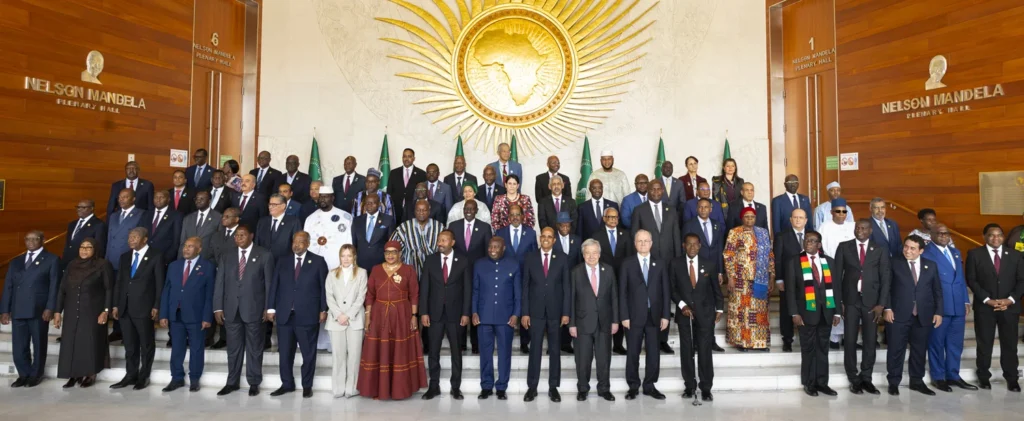
The African Union Commission (AUC) has officially opened applications for the Food & Energy Sovereignty Challenge 2026, a flagship innovation initiative under the theme “Rooted and Powered in Resilience: Securing Africa’s Future in a Shifting Global Order.”
The challenge seeks scalable, African-led technologies and solutions to advance food and energy sovereignty, with a strong emphasis on strengthening energy resilience and reducing the continent’s dependence on external power systems and volatile global supply chains. It forms part of a broader push to mobilize high-growth startups, SMEs, and deep-tech companies capable of turning proven innovations into structural solutions for African markets.
Strategic Focus on Sovereignty and Resilience
The initiative addresses critical vulnerabilities exposed by global disruptions, climate change, and supply chain instabilities. It targets two core tracks:
- Track A: Innovation for Food Sovereignty — Solutions such as bio-input revolutions (e.g., locally derived bio-fertilizers and organic pesticides), sustainable agro-processing, and climate-resilient agricultural technologies.
- Track B: Innovation for Energy Sovereignty — Breakthroughs in renewable energy systems, sustainable industrial heat, off-grid and mini-grid solutions, smart energy management, and technologies that enhance energy access, grid resilience, and reduce reliance on imported fuels or external infrastructure.
Particular interest lies in scalable technologies that strengthen energy resilience across sectors, including agro-processing and manufacturing, while fostering the “soil and energy” nexus for integrated, sustainable development.
Eligibility and Requirements
Applications are open to citizens of African Union Member States leading organizations that meet strict criteria:
- The company must be at least 51% owned by African citizens (including the diaspora).
- It must be legally registered in an AU Member State.
- Solutions must demonstrate a Technology Readiness Level (TRL) of 6 or higher — meaning proven prototypes or market-active innovations.
- Innovations must align strictly with one of the two sovereignty tracks.
Benefits for Selected Innovators
Successful applicants will join an elite cohort of “Sovereignty Builders” and receive comprehensive support, including:
- Dedicated assistance for industrial scalability and expanding production capacity.
- Facilitated access to national and regional public procurement contracts.
- Matchmaking with venture capital, institutional investors, and high-level government stakeholders.
- Participation in official AU trade and innovation missions.
- High-visibility features in the Africa Food & Energy Sovereignty Catalog 2026.
Application Details
The call opened on 11 May 2026 at 9:00 am EAT. The deadline is 25 May 2026 at 23:00 EAT (GMT+3) — a tight window reflecting the urgency of the initiative.
Submissions require a concise problem statement (max 300 words), detailed innovation description including revenue model and impact (max 500 words each), a pitch deck, a short video demonstration, and supporting legal/IP documentation.
Inquiries can be directed to: FoodEnergySovereignty@AfricanUnion.org. Full details and application portals are available on the official African Union website.
Broader Context
This challenge aligns with the African Union’s Agenda 2063 and ongoing efforts in renewable energy, climate resilience, and intra-African innovation. It builds on related programs such as the AU-EU Innovation Agenda and various energy efficiency and digital energy initiatives, positioning African innovators as central drivers of continental self-reliance.
Experts view the program as a timely mobilization of African ingenuity amid global uncertainties, with potential to catalyze job creation, climate adaptation, and long-term economic sovereignty.
Applications are encouraged from across the continent, with a call for transformative solutions that are not only technically sound but also commercially viable and impactful at scale.

