
NUPRC Urges Coordinated Action to Break Gas-to-Power Silos and Boost Nigeria’s Electricity Supply
The Nigerian Upstream Petroleum Regulatory Commission (NUPRC) has issued a strong call for collaborative, cross-sector action to resolve longstanding constraints in the gas-to-power value chain, as Nigeria continues to grapple with chronic electricity shortages despite vast natural gas reserves.
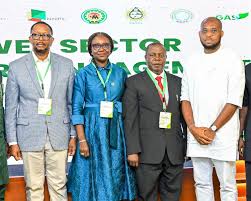
NUPRC Commission Chief Executive Oritsemeyiwa Eyesan made the appeal on Thursday during her goodwill message at the 2026 Gas-to-Power Sector Stakeholders’ Engagement, held at the Afreximbank Africa Trade Centre (AATC) in Abuja. The event, themed “Power Sector Sustainability: Framework Implementation Assurance,” brought together key players from the gas, power, and financial sectors.
Eyesan lamented that, despite Nigeria’s enormous gas reserves of approximately 215 trillion cubic feet (TCF) and years of policy interventions dating back to the Domestic Gas (DomGas) framework initiated around 2008–2009, progress has been painfully slow due to fragmented efforts and poor alignment among stakeholders.
“We segregated part of our budget for domestic gas, mainly focused on power… The needle did not move. We’ve been working in silos,” she stated. Eyesan highlighted the persistent disconnect: upstream producers advancing supply while infrastructure development lags, and power distribution companies operating in isolation.
She criticized institutional rigidity, excessive bureaucracy, and policy “grandstanding,” warning that such barriers prevent practical solutions. “If we continue to grandstand, we won’t make progress. The country will suffer, the continent will suffer,” Eyesan said.
The NUPRC chief stressed that Nigeria should no longer be focused merely on meeting domestic needs but on positioning itself as a regional energy powerhouse. She urged stakeholders to break down silos, foster innovation, and develop creative, coordinated solutions to unlock the power sector’s potential.
“If we don’t break those barriers… Ten years from now, we will still be saying the same things, and it will be a big shame,” she warned, calling for urgent collective action to deliver lasting impact for Nigeria and Africa.
The engagement reflects the federal government’s broader push under the Renewed Hope Agenda to strengthen energy infrastructure, enhance gas utilization, and improve electricity reliability — a critical enabler for economic growth, industrialization, and improved quality of life.
Industry observers view the NUPRC’s latest intervention as a timely push for implementation assurance, moving beyond policy formulation to tangible, integrated execution across the gas-to-power ecosystem.
As Nigeria seeks to harness its gas resources more effectively amid global energy transitions — where gas is increasingly recognized as a vital transition fuel — stakeholders anticipate that sustained collaboration could finally deliver measurable improvements in power supply.

