
With a $190 Billion Opportunity on the Horizon, Africa’s Energy Sector Must Activate the Missing Link of Brand Influence
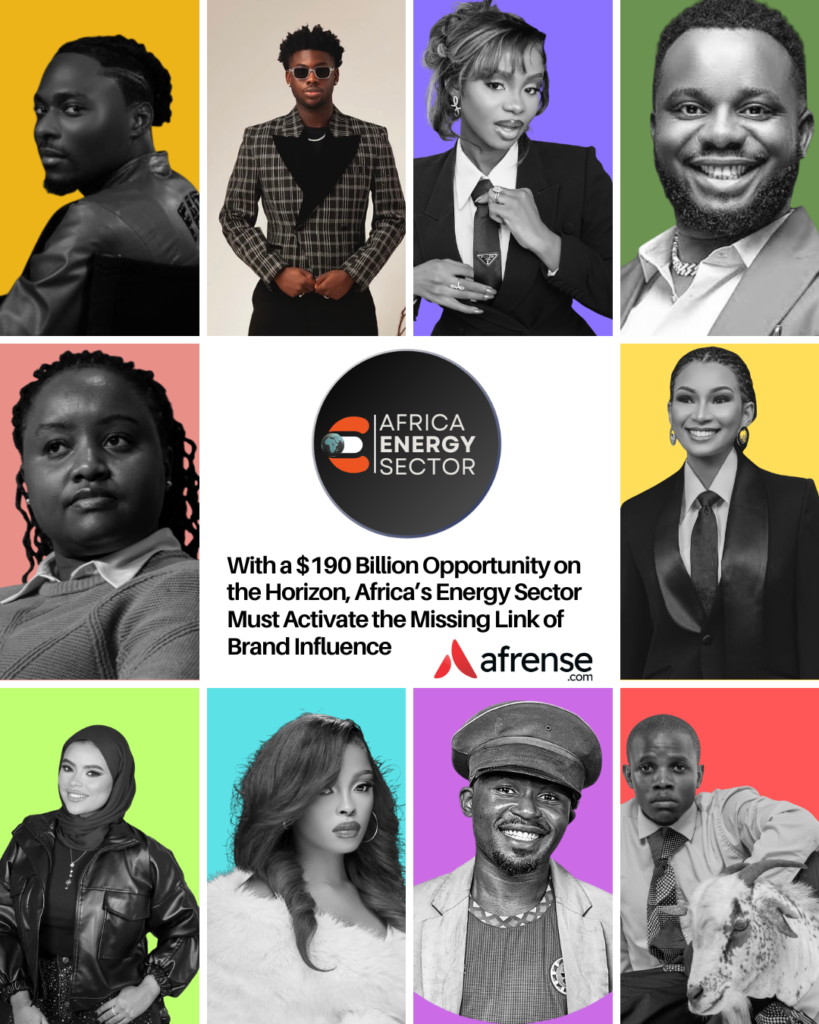
With over 600 million people still lacking reliable electricity, a renewable energy market projected to attract up to $190 billion in investments by 2030, and a young, digitally native population demanding sustainable solutions, the era of traditional, one-directional corporate communication is over.
Fashion brands do not simply design clothes. They shape identity through influencers.
Technology companies do not only launch products. They build lifestyle narratives through creators.
Automotive brands do not just sell cars. They sell aspiration through digital storytellers.
Energy, however, has historically positioned itself as too complex, too institutional, or too policy-driven for cultural engagement. Now, the energy sector — particularly in renewables, electric mobility, distributed solar, storage, and clean power — must do the same.
AFRENSE’s 2026 Brand Influencer Survey indicates that authentic storytelling from trusted voices can accelerate adoption rates by as much as 40% among Gen Z and millennials — the very demographic that will define Africa’s energy transition.
Why the Energy Sector Needs Brand Influencers
(Like Every Other Industry Already Does)
Other industries learned this lesson years ago:
Fashion & Beauty
Global brands record 5–11× ROI from influencer-led campaigns because audiences trust real people more than polished corporate advertisements.
Technology & Electric Vehicles
Companies such as Tesla and Samsung — alongside emerging African tech and EV brands — leverage lifestyle creators to demystify innovation and drive consumer interest.
Telecom & FMCGs in Africa
Major beverage and telecom companies consistently collaborate with reality-TV stars, digital creators, and micro-influencers to dominate cultural conversations.
Energy, however, has historically been perceived as:
- Too technical
- Primarily B2B
- Government-driven
- Infrastructure-focused
That mindset is now a strategic liability.
Solar affordability, rooftop installations, battery storage, EV charging networks, clean cooking solutions, and grid reform are not just technical issues. They are lifestyle decisions. They are household investments. They are youth-driven choices.
Influencers translate technical jargon into lived experience:
- A solar home system lighting a family’s evening.
- An electric motorcycle reducing a rider’s weekly fuel cost.
- A mini-grid transforming a rural business community.
Statistics inform.
Stories convert.
Why Influencer Strategy Is Even More Critical in Africa
1. Youth Engagement
Africa is the youngest continent in the world. Over 70 percent of its population is under 30. This generation consumes information through social platforms, video content, and peer recommendations
This generation is digital-first, climate-conscious, and values authenticity.
2. Trust Gap Closure
Energy messaging often faces scepticism due to pricing reforms, subsidy debates, and grid instability.
Genuine endorsements from trusted voices convert curiosity into confidence.
3. Market Expansion
From urban millennials adopting rooftop solar to rural communities discovering clean cookstoves, influencers reach segments utilities and EPC firms struggle to access cost-effectively.
4. ESG & Investment Appeal
Campaigns that highlight authentic community impact strengthen investor narratives and align with ESG expectations from global capital markets.
The Model Already Works
Micro-influencer campaigns in utility rebate programmes globally have demonstrated engagement increases exceeding 20% and measurable sign-up growth.
There is no structural reason Africa’s energy sector cannot outperform these benchmarks — especially given its youthful demographics and rapid digital growth.
Strategic Partnership Roadmap for Energy Companies
1. Campaign Formats
- Product seeding (solar kits, EV chargers, clean cookstoves)
- Behind-the-scenes renewable project visits
- Educational Reels and TikToks
- Live Q&A sessions with engineers and founders
- Community activation events
- Documentary-style storytelling
2. Measurement Framework
Move beyond vanity metrics. Track:
- Website traffic spikes
- Solar inquiry volumes
- EV test-drive bookings
- Lead generation
- Sentiment analysis
- Policy awareness engagement
3. Pan-African Expansion
Combine national influencers with continental climate and sustainability voices to create cross-border storytelling that reflects Africa’s shared transition journey.
How AFRENSE Supports This Shift
AFRENSE is building a Verified Energy Brand Influencer Directory (2026 Edition).
In the coming days, we will unveil:
- 10 verified influencer recommendations per selected African country
- Categorised by impact, audience relevance, and alignment with energy transition themes
- Data-backed profiles for brand matching
Our Energy Sector Directory will allow companies to:
- Connect directly with vetted creators
- Access campaign case studies
- Design co-created storytelling aligned with sustainability goals
- Measure performance through structured reporting
This is not entertainment marketing.
It is strategic sector positioning.
The Bottom Line
The energy sector powers economies, industries, cities, and digital ecosystems — yet in marketing terms, it remains one of the most conservative industries in Africa.
From oil & gas to renewables, EV mobility to clean tech, energy companies shape the world we live in. But visibility, cultural relevance, and youth engagement remain underleveraged opportunities.
Energy brands can no longer rely solely on boardrooms, press releases, and policy papers.
They must engage culture.
And culture today is driven by influencers.
Strategic partnerships with credible brand influencers are no longer optional — they are essential to accelerating Africa’s sustainable and inclusive energy future.
Other industries have already proven the playbook.
AFRENSE is delivering the African-adapted version.
Ready to Partner?
Explore the full 2026 Influencer Survey results, verified profiles, and collaboration opportunities in the AFRENSE Directory.
Together, we don’t just talk about powering Africa —
we make it culturally irresistible.
AFRENSE – Championing Innovation, Storytelling, Partnerships & Impact
Africa Energy Sector | Powered by Ranks Africa
www.afrense.com

