
Lagos Pioneers Decentralised Power with 14 New Operator Licences
In a landmark step towards energy self-reliance, the Lagos State Electricity Regulatory Commission (LASERC) has issued 14 new licences to operators in the state’s electricity value chain, marking Nigeria’s first major shift from federal to state-level regulation of power generation and supply.
The licences, presented on Thursday at LASERC’s maiden Stakeholders’ Engagement Forum in Ikeja, cover a mix of off-grid generation, embedded generation, metering systems, and interconnected mini-grids. They aim to boost local generation capacity, enhance grid stability, and reduce dependence on the often-unreliable national grid.
Examples include Axxela Limited (5.8MW), Daybreak Power Solutions Limited (combined 16,224kWp across sites), Isolo Power Supply Limited, GoosLink Engineering Limited (330kV), Enaro Energy Mini-Grid Limited, and New Hampshire Capital Limited (meter asset provider).
LASERC CEO Mrs Temitope George described the occasion as “a defining moment” in the evolution of Lagos’ electricity sector, underscoring the commission’s commitment to transparency, collaboration, and regulatory excellence. Board Chairman Alexander Ogunbiyi personally presented the licences to operators who met stringent compliance standards.
This pioneering move builds on the Electricity Act 2023, which opened the door for states to regulate their own markets, and the Lagos State Electricity Law 2024. Lagos completed its regulatory transition in 2025, positioning it as a trailblazer among subnational governments.
Governor Babajide Sanwo-Olu’s administration expects the first state-licensed independent power producers (IPPs) to commence commercial operations between late 2026 and early 2027, with projects strategically targeted at industrial clusters and critical infrastructure to deliver reliable power where it is needed most.
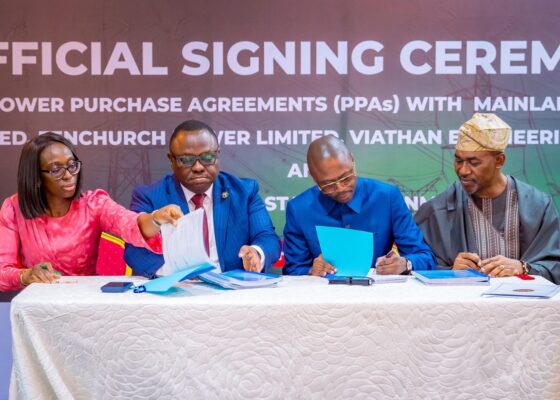
The initiative is part of broader efforts — including recent Power Purchase Agreements with firms like Mainland Power, Fenchurch Power, and Viathan Engineering — to significantly expand generation capacity and deliver sustainable, market-driven electricity solutions for Africa’s largest megacity.
Analysts view this as a model for other states, potentially transforming Nigeria’s fragmented power sector through decentralised governance and private sector investment.

