
Nigeria’s Power Minister Highlights Transformative Reforms at West Africa Energy Summit
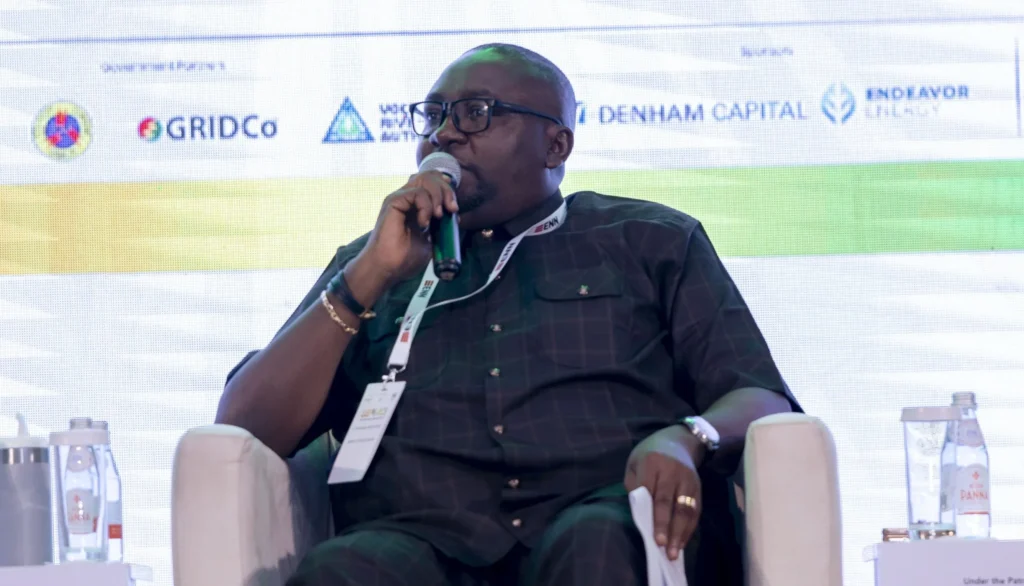
Nigeria’s Minister of Power, Chief Adebayo Adelabu, has announced significant progress in the country’s electricity sector over the past two years, positioning Nigeria as a potential pillar for regional energy security in West Africa.
Speaking at the West Africa Energy Cooperation Summit organised by EnergyNet in Ghana, the Minister detailed key achievements under the President Bola Tinubu administration:
Generation
– Installed capacity increased from 13,000 MW to over 14,000 MW in 24 months.
– Current average generation stands at approximately 6,000 MW against an available capacity of more than 14,000 MW, creating an 8,000 MW surplus largely stranded due to limited domestic demand and distribution constraints.
– Nigeria exports only about 600 MW to Togo, Benin, and Niger.
– Utility-scale solar projects, particularly in northern Nigeria, are being fast-tracked to complement existing thermal and hydropower assets.
Transmission
– Historic weaknesses in the transmission network are being addressed through the continuation of the Presidential Power Initiative (PPI, Siemens Project).
– 10 new power transformers and 10 mobile substations have been installed and commissioned nationwide.
– The Transmission Company of Nigeria (TCN) has been unbundled into the Transmission Service Provider (TSP) and the Nigerian Independent System Operator (NISO) for greater operational efficiency.
– Grid collapses have dropped dramatically from over a dozen in 2024 to only one incident in 2025, restored within two hours.
– Phase One of the PPI transmission expansion is underway, already adding more than 700 MW of wheeling capacity and bringing the grid’s evacuation limit to approximately 8,500 MW. Upon completion, an additional 7,000 MW will be added, pushing total transmission capacity beyond 15,000 MW.
Distribution
The 11 privatised distribution companies (DisCos) have recorded improvements in infrastructure upgrades, metering deployment, and revenue collection, resulting in better supply reliability for end-users.
Minister Adelabu emphasised that while challenges persist, the ongoing structural and infrastructural reforms represent an irreversible transformation of the sector. He expressed confidence that a revitalised Nigerian power system will not only meet domestic industrial demand but also anchor energy security and deeper market integration across the West African sub-region.
“Once fully realised, these reforms will guarantee reliable supply and accelerate progress toward universal electricity access throughout West Africa,” the Minister concluded.
The summit, attended by regional energy ministers, regulators, investors, and industry leaders, continues to focus on collaborative pathways toward a resilient and sustainable energy future for the continent.

