
Africa at G20: Fossil Fuels Must Drive Industrialisation and End Energy Poverty – African Energy Chamber
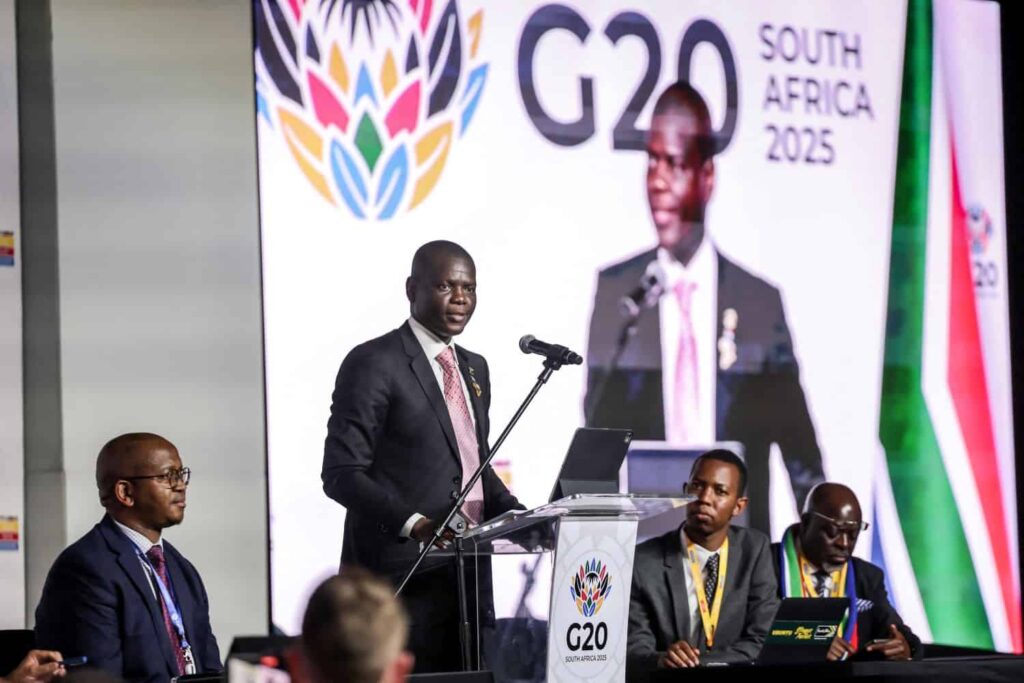
As South Africa hosts the 2025 G20 Summit, the African Energy Chamber (AEC) has issued a powerful call for the global community to unequivocally support the responsible development of Africa’s vast oil and gas resources as the fastest and most realistic pathway to industrialisation, job creation and the eradication of energy poverty.
In its strongest statement yet to world leaders, the AEC declared that Africa’s fossil fuels – particularly natural gas – are not a “transition” fuel but the cornerstone of the continent’s economic future. With 600 million Africans still without electricity and 900 million lacking clean cooking facilities, the Chamber insists that ideological restrictions on financing and the stigmatisation of hydrocarbons are prolonging poverty rather than solving climate challenges.
Key projections from the AEC’s upcoming 2026 African Energy Outlook highlight the continent’s rising trajectory:
– Oil and gas production expected to reach 11.4 million bpd by 2026, rising to 13.6 million bpd by 2030
– Africa to attract approximately $41 billion in global upstream CapEx by 2026
– Active and upcoming licensing rounds in Angola, Nigeria, Congo, Equatorial Guinea, Egypt, Libya, Namibia, Tanzania, Sierra Leone and South Africa
Major gas developments continue apace, including Mozambique’s Rovuma Basin LNG projects, Senegal’s Greater Tortue Ahmeyim Phase 2 and Yaakar-Teranga, Equatorial Guinea’s Gas Mega Hub, and the advancement of the East African Crude Oil Pipeline linking Uganda and Tanzania.
Echoing the AEC’s position, South Africa’s Minister of Mineral and Petroleum Resources, Gwede Mantashe, told the G20 Africa Energy Investment Forum:
“Drill, baby, drill. We have no legal restriction on oil and gas exploration in South Africa. If we make a breakthrough, our GDP will grow exponentially. Our people will never breathe fresh air in darkness.”
The Chamber strongly criticised restrictive financing policies by multilateral institutions and Western banks, arguing they threaten to derail critical projects just as Africa needs them most. It welcomed the United States’ $4.5 billion financing commitment to Mozambique LNG as proof that responsible, large-scale investment in African hydrocarbons delivers energy security, industrial growth and poverty reduction simultaneously.
The AEC urged the G20 to:
– Make African fossil-fuel development a core pillar of its partnership with the continent
– Restore and expand upstream and midstream financing at scale
– End the stigmatisation of oil and gas investment
– Support natural gas as the backbone for power generation, clean cooking (via LPG), industry and domestic electrification
“Africa rejects any forced phase-out of fossil fuels that condemns hundreds of millions to continued energy poverty,” the Chamber stated. “We demand a just energy future powered by African resources, financed fairly, and delivering real prosperity to African people.”
With governments across the continent implementing investor-friendly reforms, opening new acreage and prioritising local content, the AEC concluded that Africa stands ready – provided the global financial system stops punishing development and starts enabling it.

